Guides
What a coffee shop keeps in stock, and who supplies it
A coffee shop stocks roasted beans, dairy, flavor syrups, pastries and takeaway packaging, each item with its own par level and its own supplier.
What to take away
- A coffee shop holds five stock groupsroasted beans, dairy and alternatives, syrups and powders, pastry and food, and packaging. Each is ordered from a different kind of supplier.
- Par level is a decision, not a guess. Reorder point equals U times (L plus S); order quantity equals U times D.
- Set the safety allowance S by what breaks when the item runs out, not by habit. Milk and beans do not deserve the same cushion.
- Storage volume overrides the arithmetic. If the shelf cannot take the order, the plan is fiction.
- Beans have a quality window, so extra cover past it is stale coffee, not insurance.
The five stock groups, and who supplies each
Named examples in each group: roasted beans from wholesale roasters such as Counter Culture Coffee, Intelligentsia, Stumptown, La Colombe, and Peet's; dairy and alternatives from regional dairy distributors such as Prairie Farms, Hood, and Borden where they operate, broadline distributors such as Sysco and US Foods, plus Oatly, Califia Farms, and Pacific Foods.
Syrups come from Torani, Monin, DaVinci Gourmet, and Ghirardelli. Pastry comes from local bakeries or frozen foodservice suppliers such as Bridor and Rich Products. Packaging comes from Imperial Dade, Bunzl, Veritiv, Sysco, US Foods, Restaurant Depot, and WebstaurantStore.
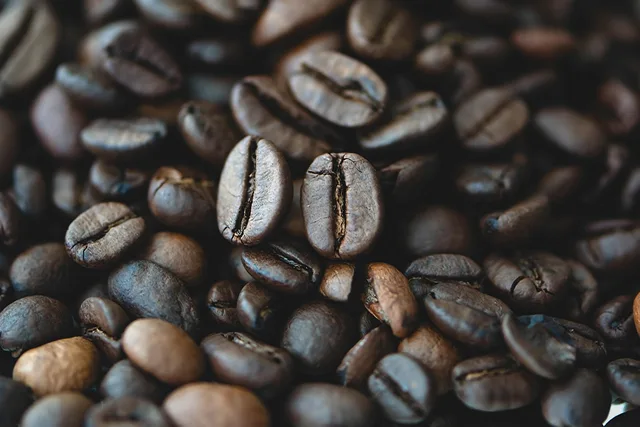
Roasted beans. Your roaster, whether local or a regional wholesale account. Beans are the one item where the supplier relationship sets quality, so most shops buy from one roaster rather than three. A wholesale roaster typically prices by the pound with a standing weekly or twice-weekly delivery.
Dairy and alternatives. A dairy distributor or a broadline foodservice distributor. Milk, cream, oat, almond and soy. This is the group that spoils fastest and takes the most cold space, so it is usually ordered two or three times a week.
Broadline foodservice distributors, the kind that also serve restaurants, typically set a minimum order in the range of $250 to $500 per drop, and they deliver on a fixed route. Ask for the order cut-off time as well as the minimum, and get both in writing.
Syrups, sauces and powders. A beverage distributor or direct from the brand. Vanilla, caramel, mocha and chai cover most menus. Long shelf life, low usage per drink, and the group most likely to sit for months.
Pastry and prepared food. A local bakery, a commissary kitchen, or your own back-of-house. Ordered to a day-of-week pattern rather than a flat number.
Packaging. A paper and disposables distributor. Cups, lids, sleeves, napkins, bags and straws. Cheap per unit, bulky to store, and the group that runs out silently mid-shift.
Days of cover, in named variables
Let U be your average daily usage of an item, measured over at least four weeks. Let L be the supplier's lead time in days. Let S be a safety allowance in days, chosen by how badly the bar suffers when that item runs out.
Reorder point and order quantity
- Uaverage daily usage, four weeks
- Lsupplier lead time in days
- Ssafety allowance in days
- U x (L + S)reorder point
Reorder point equals U multiplied by (L plus S).
Order quantity equals U multiplied by D, where D is the days of cover you have decided to hold.
Choose S by consequence, not by habit. Running out of a syrup costs you one item on the menu. Running out of milk costs you the peak. Those two do not deserve the same safety allowance.
Worked example: milk. A shop uses 12 gallons a day, so U is 12. The dairy lead time L is 2 days and S is 1 day, since a milk outage stops most of the menu.
Reorder point is 12 times 3, or 36 gallons. At D of 4 days the order quantity is 12 times 4, or 48 gallons.
Worked example: beans. The same shop uses 5 pounds a day, so U is 5. Roaster lead time L is 4 days and S is 2 days. Reorder point is 5 times 6, or 30 pounds.
The quality window caps D. If the roaster states three weeks from roast and transit takes 4 days, D of 10 days sits inside it, so the order quantity is 5 times 10, or 50 pounds.
Choose D by item class
| Class | What sets D | Typical days of cover | The trap |
|---|---|---|---|
| Roasted beans | The quality window, not the price break | 7 to 14 days | A bulk discount that buys stale weeks |
| Milk and dairy | Cold storage volume and delivery frequency | 3 to 5 days | Ordering to demand when the fridge cannot hold it |
| Pastry and prepared food | The day-of-week pattern from your own sales | 1 to 2 days | Ordering flat when demand is not flat |
| Packaging | Storage space and a single reorder point | 30 to 60 days | Running out silently mid shift |
| Syrups and dry goods | Shelf space and how many items use it | 45 to 90 days | A bottle that serves one drink and sits for months |
Beans are the class people get wrong in the direction that feels prudent. Past the window, extra cover is not insurance; it is coffee that will taste worse than the coffee you are known for.
The storage constraint that beats the arithmetic
Measure your cold storage in the units you actually buy, then measure your dry storage the same way. Compare both against the order quantity the arithmetic produced.
When the order does not fit
Does the order quantity fit your storage?
Place the order as calculated
Order more often, buy storage, or cut the range
If the order does not fit, you have three options and only three: order more often, buy storage, or reduce the range so fewer items compete for the same shelf. Managing the shortfall by hand is not one of them, because it fails on the busiest day.
A unit with nowhere to put a milk delivery creates a daily problem, and holding certain products or equipment can carry its own permission, which is tracked in the approvals a coffee shop has to hold.
Counting, and what the count is for
Count weekly for fast movers and monthly for everything else. Use the same person and the same order every time, because a count taken differently is not comparable to the last one.
Then use the counts to answer two questions the point of sale cannot. First, does actual usage match theoretical usage from recipes? A persistent gap usually means pours over recipe, and on a milk heavy menu that gap is the single biggest correction most shops make. Second, is waste falling? Only a written waste log answers that.
Keep purchase records, delivery notes and counts. They are what a bookkeeper works from and what a tax authority expects a business to have.
Pastry is a forecast, not an order
Ordering pastry to a weekly pattern
- Track sell through by day of week
- Track it for one month
- Order to that pattern, not a flat number
- Accept selling out late in the day
Take four weeks of pastry sales by weekday from the point of sale. Divide each weekday's average by the average day. The result is an index you multiply by a base quantity.
If the shop sells 60 pastries on an average day, a Saturday index of 1.6 means an order of 96, and a Monday index of 0.7 means an order of 42. Round to the tray size your bakery sells, and rebuild the index monthly.
For surplus that does arise, the EPA's Wasted Food Scale ranks the paths for food that will not be sold, with prevention at the top. Prevention here means the order, since everything after the order is damage control.
The price you pay is not fixed
Green coffee is a globally traded commodity, and production and trade are reported publicly. The USDA Foreign Agricultural Service publishes Coffee: World Markets and Trade, covering production and trade across origins and seasons.
Practically, this means two things for stock. Know what your price is fixed until, and ask for written notice of changes. And when a cost moves, decide deliberately whether to absorb it or reflect it, using the method in how the price list is built rather than deciding in the week it lands.
Specifications and disclosure
Keep a specification for everything you buy in, and update it when a supplier changes a product. Silent substitutions are common and they break recipes and records at the same time.
The FDA's questions and answers on food allergens covers the federal framework for labeled packaged food. What you must disclose about drinks assembled at a shared bar is set locally, so ask your health department and keep the written reply.
Whoever receives deliveries is the person who catches a substitution, which makes receiving a trained task rather than a favor. It belongs inside the standard a new starter is taken through.
When usage changes
A promotion, a seasonal drink, a new office opening nearby or a change in hours all move U. Recalculate rather than assuming the old par levels still hold.
Marketing is the most common cause and the least often communicated to whoever orders. Anything that drives demand should reach the stock plan before it reaches the customer, which is why it belongs in the same conversation as how a shop builds demand. The framework the whole thing sits in is sourcing and stock for a coffee shop.
Common questions
How many days of beans should I hold?
Enough to cover lead time and a safety allowance, and never so much that you are pouring coffee from outside its window. Calculate the first, and let the window cap the second.
Should par levels be different in summer?
Almost certainly, because the mix moves toward cold drinks and the usage of milk, ice and syrups changes with it. Recalculate seasonally rather than adjusting by feel.
What is the cheapest way to reduce waste?
Order more often in smaller amounts, where storage and minimums allow. Most waste in a coffee shop is bought, not spoiled.