Guides
Portland cafe market compared with Austin for independent coffee shop openings
Cafe barista training shapes the Portland versus Austin choice: compare Oregon and Texas permitting, startup costs, leases, and competition before you sign.
What to take away
- Portland prime retail asking rents typically ran $28 to $45 per square foot a year in 2024, while Austin growth corridors asked $30 to $55.
- Startup costs land lower in Austin if you begin with a food truck, and lower in Portland if you take over a failed cafe with equipment already in place.
- Oregon and Texas both require a food handler card and a local health inspection, and Texas also requires a sales tax permit and a mixed beverage permit if you pour spirits.
- A 1,200 square foot Portland cafe on a prime block needs roughly 250 to 350 transactions a day to break even, and a 1,000 square foot Austin storefront on a hot corridor needs roughly 300 to 400.
- Use free SBA counseling and local resource partners before you sign anything in either city.
Portland's dense independent coffee scene and what it demands
Portland's independent coffee scene is not a market you enter casually. The city has one of the highest concentrations of independent cafes per capita in the United States, and many of them roast their own beans. That means customers arrive with opinions about single origin espresso, batch brew temperature, and milk texture.
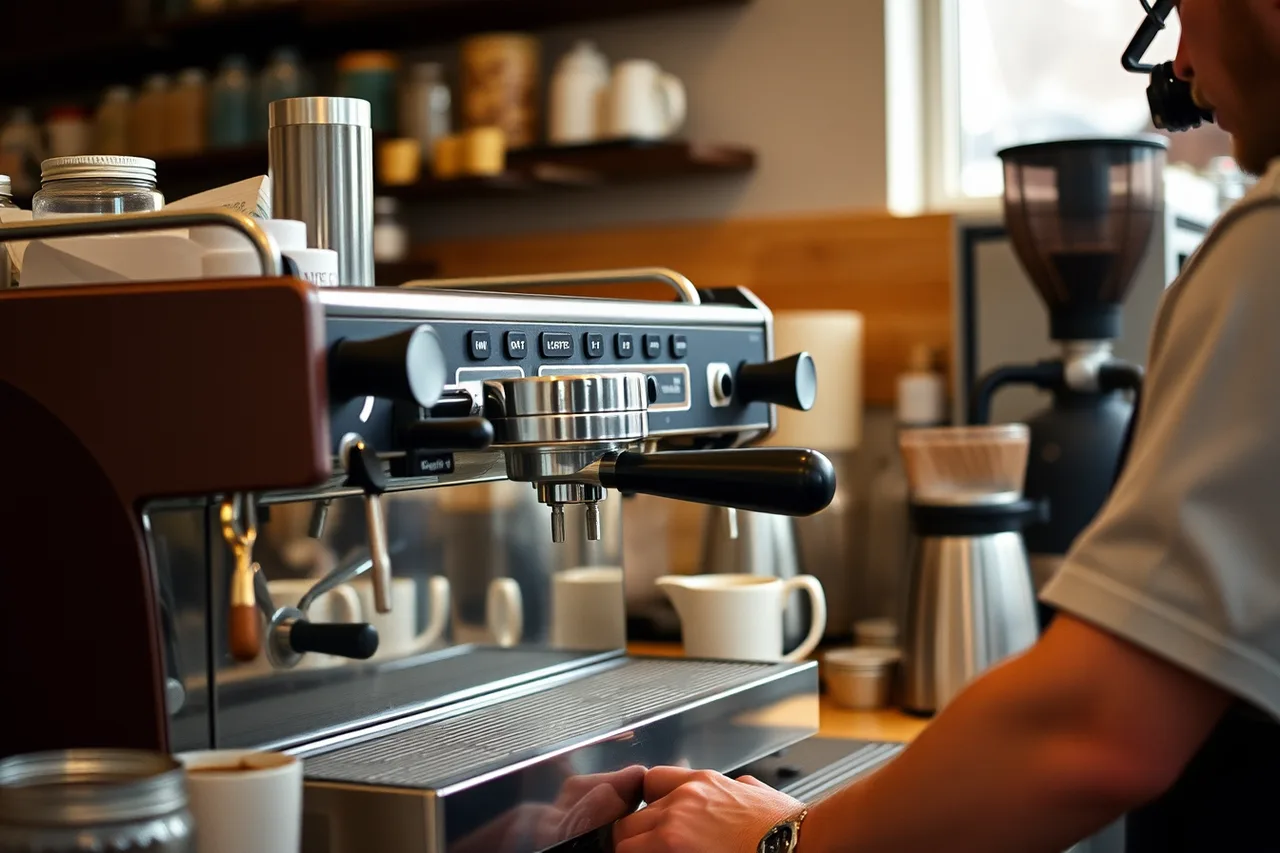
A cafe opening in Portland competes with neighborhood institutions that have trained staff for years. Your differentiation cannot be "good coffee." It has to be a specific combination: a roaster relationship, a pastry program, a room people want to sit in, or a service model nobody else is running.
Stumptown Coffee Roasters, Coava Coffee Roasters, Heart Coffee Roasters, Nossa Familia Coffee, and Water Avenue Coffee all roast in Portland and sell wholesale to cafes. Buckman Coffee Factory rents roasting time and space to smaller brands. Wholesale programs typically include barista workshops, grinder calibration, and recipe work.
The Portland cafe market also carries a labor expectation. Baristas in this city often treat the job as a craft, and they will ask about your grinder, your water filtration, and your training budget in the interview. If you cannot answer those questions with specifics, you will hire second choices.
Portland's density cuts both ways. Foot traffic is strong in corridors like Division, Alberta, and Hawthorne, but rent follows that traffic. A 1,200 square foot cafe on a prime block can carry a base rent that requires roughly 250 to 350 transactions a day to break even, depending on your check average and labor model.
Asking rents in those corridors and on Mississippi Avenue, Belmont, and the Pearl District typically run $28 to $45 per square foot a year, triple net. At $35 per square foot, 1,200 square feet costs about $42,000 a year before CAM, taxes, and insurance. Montavilla, St. Johns, and Sellwood sit at the lower end.
Multnomah County food service licenses are scaled by risk and size, typically $250 to $900 a year, with plan review near $300 to $600 on a new build. A City of Portland business license application costs $100, and an Oregon LLC filing costs $100. County plan review typically takes two to four weeks.
Before you commit, study how other operators compare markets for coffee shop so you are not choosing Portland out of habit. A dense scene is an advantage only if you can train to its standard.
What Portland demands from a new owner
A new owner in this market has to arrive with five things in writing.
- A named roaster and a written espresso recipe that every barista can reproduce.
- A training calendar with paid practice shifts, not unpaid "shadowing."
- A water treatment plan, because Portland water varies by building.
- A pastry or food partner, since coffee alone rarely covers prime rent.
- A waste and composting routine that meets city rules.
In practice that means a signed wholesale agreement with a roaster who will send a trainer, a water test before you buy filtration, and a recipe card at every grinder.
Which market fits which kind of owner
Choose Portland if you are a coffee professional who wants to compete on craft, you can fund a full buildout, and you are willing to hire and train career baristas. The Portland cafe market rewards patience and product depth.
Choose Austin if you want to test a concept cheaply and you are comfortable with a mobile or walk-up start. Austin coffee shop openings reward operators who treat real estate and labor as a moving target.
Budget decides the choice more often than taste does. With $60,000 to $150,000 in hand, open in Austin as a trailer or walk-up and plan a storefront within three years. With $250,000 to $450,000, Portland's prime corridors and Austin's storefront market are both within reach.
Under $60,000, look at buying a working cafe with equipment already in place rather than building one.
If you are opening your first cafe and your budget is tight, Austin's food-truck-to-cafe pipeline offers a lower-risk entry. If you already have roasting relationships and a training background, Portland's independent coffee scene offers a customer base that values what you know.
Either way, the permitting, the lease, and the training plan are the three decisions that determine whether the cafe survives year two. Work them in that order, and get free help before you sign.
Austin's food-truck-to-cafe pipeline and its cost structure
Austin's food-truck-to-cafe pipeline is the defining feature of its coffee market. Many of the city's best known shops started as trailers or walk-up windows, then moved into brick and mortar once they had a customer base and cash flow.
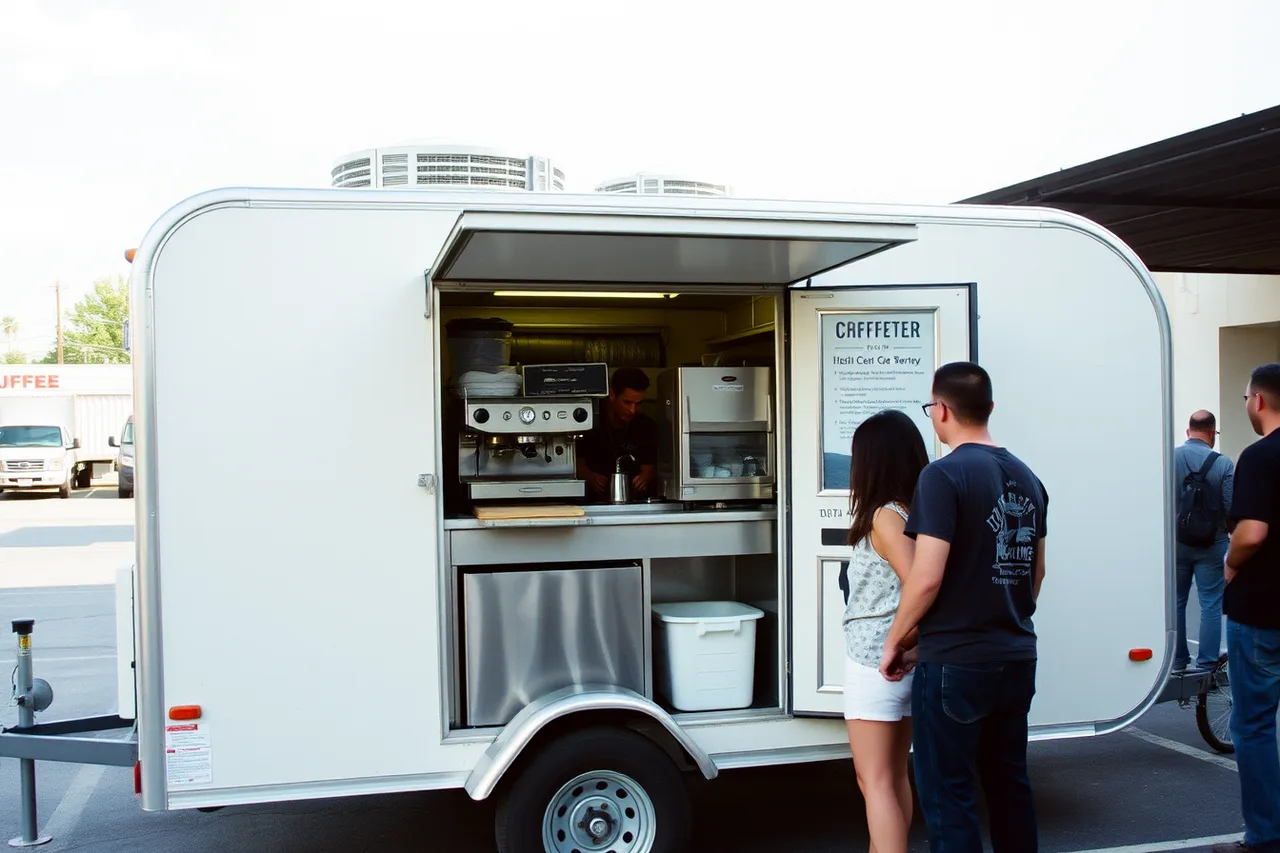
The pipeline works because Texas rules for mobile food units are relatively navigable, and Austin has a large pool of lots and food parks willing to host a coffee trailer. You can test a location, a menu, and a brand for $35,000 to $70,000, against $150,000 or more for a storefront buildout.
Sites such as Cosmic Coffee + Beer Garden, Radio Coffee & Beer, and Meanwhile Brewing rotate food trucks, and a coffee trailer can rent a pad there without a storefront lease.
Cost structure is where the pipeline pays off. A coffee trailer with a two-group espresso machine, refrigeration, and a hand sink can be built and permitted for $35,000 to $70,000 all in. You still need commissary support, potable water, and a grease and wastewater plan, but the fixed costs are lower and the lease term is shorter.
Greater Goods Coffee Roasters, Texas Coffee Traders, Little City Coffee Roasters, and Mozart's Coffee Roasters all supply Austin cafes, and several run staff classes for wholesale accounts. Cafes like Houndstooth Coffee, Flat Track Coffee, and Fleet Coffee set the service bar that new shops are measured against.
Austin coffee shop openings then face a second cost wall: the storefront. Retail rents in Austin have risen faster than in Portland over the past decade, and landlords in hot corridors often ask for personal guarantees and larger deposits from first-time operators.
Asking rents on South Congress, East Sixth, and South Lamar typically run $30 to $55 per square foot a year, triple net. A 1,000 square foot shop at $40 per square foot costs about $40,000 a year before CAM.
The transition from trailer to cafe is also a training problem. A trailer crew of two works with tight movement and no back room. A storefront crew of six needs a shift structure, a bar flow, and a trainer who can teach both espresso and register.
That is the moment to formalize your startup and market guide assumptions before you sign a five-year lease.
A worked example: trailer to storefront in Austin
Trailer to storefront in Austin
- Year 1coffee trailer in a food park, two staff, 7 a.m. to 2 p.m., no food beyond pastries, $35,000 to $70,000 to build and permit.
- Year 2second trailer or a kiosk, add a manager, start tracking drink times and waste.
- Year 31,000 square foot storefront, six staff, full espresso and batch program, training manual written from the trailer recipes, buildout $125,000 to $250,000.
- Year 4wholesale beans or a second location, only if the first store holds a 20 percent labor cost and a 25 percent prime cost.
Oregon and Texas permitting compared for cafe openings
Oregon permitting and Texas permitting share a spine: register the business, get a sales tax or revenue account, pass a health inspection, and post your food handler cards. The differences are in the details and the local layers.
In Oregon, you register with the Secretary of State, then get a business license from the city or county where you operate. Portland requires a city business license with a $100 application fee, and Multnomah County handles food service inspections.
You also need a food handler card from Oregon Health Authority approved training, and a food manager certification if you are the person in charge. Approved cards cost about $10 and take about an hour online.
In Texas, you register with the Secretary of State or as a sole proprietor, then get a sales tax permit from the Texas Comptroller. An LLC filing costs $300, the sales tax permit is free, and Austin and Travis County Public Health handle food permits. Mobile food units need a commissary agreement.
Texas food handler cards come through accredited providers and cost $7 to $15, and a certified food manager is required for most food establishments.
Neither state requires a liquor license for coffee, but Texas requires a mixed beverage permit if you add spirits, and Oregon requires a liquor license from the Oregon Liquor and Cannabis Commission.
Plan review and inspection timelines are close. Multnomah County plan review typically takes two to four weeks, and Austin Public Health plan review typically takes two to four weeks, with inspections scheduled one to two weeks out.
Two federal pages cover the registrations that sit under the state and county layers. Start with the USAGov guide to startup permit and license steps so you do not miss a registration. Then use the broader how to start and fund a business guide to sequence permits against your buildout schedule.
Permitting checklist for either city
- Register your business entity with the state.
- Obtain a city or county business license.
- Get a sales tax or revenue account.
- Pass the local health department plan review before construction.
- Secure food handler cards for every employee.
- Name a certified food manager for the location.
- Confirm workers compensation and OSHA obligations.
Startup costs and lease terms in Portland and Austin
Cafe startup costs by city swing widely, but the pattern is consistent. Austin is cheaper to test and more expensive to scale. Portland is more expensive to enter and more stable once you are open, because the customer base is already trained to pay specialty prices.
Equipment is the largest controllable line in both cities. A used two-group espresso machine, two grinders, a batch brewer, refrigeration, and a POS system typically runs $15,000 to $35,000 used and $35,000 to $70,000 new.
Buildout, plumbing, and electrical work are where budgets break, especially in older Portland buildings and in Austin retail shells that were never built for food. Typical buildout runs $150 to $300 per square foot in Portland and $125 to $250 in Austin, so a 1,200 square foot cafe absorbs $150,000 to $360,000 before equipment.
Lease conditions differ in tone. Portland landlords in established neighborhoods often want five year terms with annual escalators and a personal guarantee. Austin landlords in growth corridors may offer shorter initial terms but ask for higher deposits and percentage rent.
In both cities, negotiate a construction period, a cap on CAM charges, and a clear exit if permits stall.
Working capital is the line most first-time owners underfund. Plan for at least three to six months of operating expenses, including payroll, rent, and loan payments, before the cafe reaches steady traffic.
A realistic startup costs and funding options sheet should separate one-time buildout from monthly fixed costs so you can see your break-even day count.
Site selection drives all of these numbers. A cheaper lease two blocks off a main corridor can save six figures over five years, but only if the location has a reason for customers to walk to it. Use a disciplined site selection and location process rather than falling for a vacant space because the rent looks low.
Cost comparison at a glance, with typical 2024 ranges
Cost comparison at a glance
Portland, OR
- Entity registration
- $100, Oregon Secretary of State
- Sales tax account
- None; Oregon has no sales tax
- Food handler card
- About $10 per person
- City license
- $100 application fee
- Health permit
- $250 to $900 a year, plus $300 to $600 plan review
- Mobile unit permit
- Limited; county approval needed
- Core equipment
- $15,000 to $35,000 used, $35,000 to $70,000 new
- Storefront buildout
- $150 to $300 per square foot
- Prime retail rent
- $28 to $45 per square foot a year, triple net
- Break-even traffic
- 250 to 350 transactions a day at 1,200 square feet
Austin, TX
- Entity registration
- $300, Texas Secretary of State
- Sales tax account
- Free, Texas Comptroller permit
- Food handler card
- $7 to $15 per person
- City license
- No general city license fee
- Health permit
- $400 to $1,200 a year, plus plan review
- Mobile unit permit
- $300 to $600 vendor permit
- Core equipment
- $15,000 to $35,000 used, $35,000 to $70,000 new
- Storefront buildout
- $125 to $250 per square foot
- Prime retail rent
- $30 to $55 per square foot a year, triple net
- Break-even traffic
- 300 to 400 transactions a day at 1,000 square feet
Figures are typical ranges from 2024 state fee schedules and local broker asking rents, not quotes.
Training ecosystems: roasters, SCA modules and local programs
Training ecosystems in both cities are strong, but they teach different things. Portland's ecosystem is built around roasting, cupping, and extraction science. Austin's is built around volume, speed, and hospitality under pressure.
Portland has a deep bench of roasters who offer wholesale support, including barista workshops, equipment service, and recipe development. Stumptown, Coava, Heart, and Nossa Familia all run wholesale training for accounts.
The Specialty Coffee Association's Barista Skills and Brewing modules are taught or hosted in the region, and many Portland cafes use SCA foundations as a baseline for internal promotion.
Austin's training scene leans on the food truck and high-volume cafe world. Owners often build their own training programs because the city's turnover is faster and the shifts are busier. Texas Coffee Traders runs public barista classes in East Austin, and Greater Goods and Little City support wholesale accounts with staff training.
SCA modules are available through roasters and independent trainers, but the more common path is in-house certification tied to drink times and ticket accuracy.
Training is the one line item that decides whether a new cafe holds its standard past the first year. Budget it before you sign a lease.
The federal government adds a free layer that both cities share. SBA Resource Partners, including Small Business Development Centers and SCORE mentors, advise cafe startups on business plans, cash flow, and loan packages. You can find them through the Resource Partners directory.
Free one-on-one help is also available through SBA counseling and mentoring, which is useful when you are writing a training budget into a loan application. A lender wants to see that your hires and trains in 2027 plan is costed, scheduled, and tied to retention.
How the two ecosystems differ
Portland
- Core skill
- Extraction, cupping, roast dialogue
- Common provider
- Wholesale roasters, SCA trainers
- Certification
- SCA modules, food manager
- Turnover pattern
- Lower, craft oriented
- Best use of budget
- Advanced barista skills
Austin
- Core skill
- Speed, consistency, hospitality
- Common provider
- In-house programs, roaster support
- Certification
- Food manager, in-house levels
- Turnover pattern
- Higher, volume oriented
- Best use of budget
- Onboarding and shift leadership
Portland buyers pay for extraction skill, and Austin buyers pay for consistency at speed. A Portland hire who can dial in a single origin and hold it through a rush is worth more than one who only knows the register.
An Austin hire who can hit drink times on a six person floor is worth more than one who cups every lot.
Competition, saturation and differentiation in each city
Competition in Portland is about depth. The city has more independent cafes than it can comfortably support in some neighborhoods, and closures happen when a shop cannot articulate why it exists.
Saturation is real on Division, Alberta, and Hawthorne, but gaps remain in outer neighborhoods such as Montavilla, St. Johns, and Powellhurst, near hospitals, and in industrial districts with day traffic.
Competition in Austin is about speed and real estate. The market is growing, but so is the cost of a good corner. Austin coffee shop openings succeed when they capture a routine: the morning commute, the office park, the university crowd, or the food park regulars.
Corridors to watch include South Congress, East Cesar Chavez, Burnet Road, and Mueller, where a new shop needs roughly 300 to 400 transactions a day at a $7 check average to cover rent, labor, and debt.
Differentiation looks different in each city. In Portland, a narrow focus works: a specific roast profile, a manual brew bar, a vegan pastry program, or a retail shelf that sells beans and gear. In Austin, a broad utility works: fast mobile ordering, breakfast tacos, drive-through or walk-up service, and extended hours.
Both markets punish a cafe that tries to be everything. Pick one customer and one occasion, and build the daily routine around it.