Guides
A shop checklist for the coffee complaints customers bring back most
The recurring problems customers arrive with, what actually causes each one, and how a shop can answer without selling something unnecessary.
Customers rarely arrive saying their dose is inconsistent. They arrive saying the coffee is bitter, or that it tasted better last month. This is a checklist for translating what they say into what is happening. The useful reply is a question with a factual answer, which is the same discipline behind separating a checkable claim from atmosphere.
What to take away
- Most counter complaints reduce to four causes, and only one of them is the coffee.
- The cold brew acidity claim is repeated constantly and the evidence does not support it.
- Storage advice is where a shop can help most and sell least.
- Answering honestly and selling nothing builds the return visit.
The four causes behind most complaints
| What they say | Usual cause | What to ask |
|---|---|---|
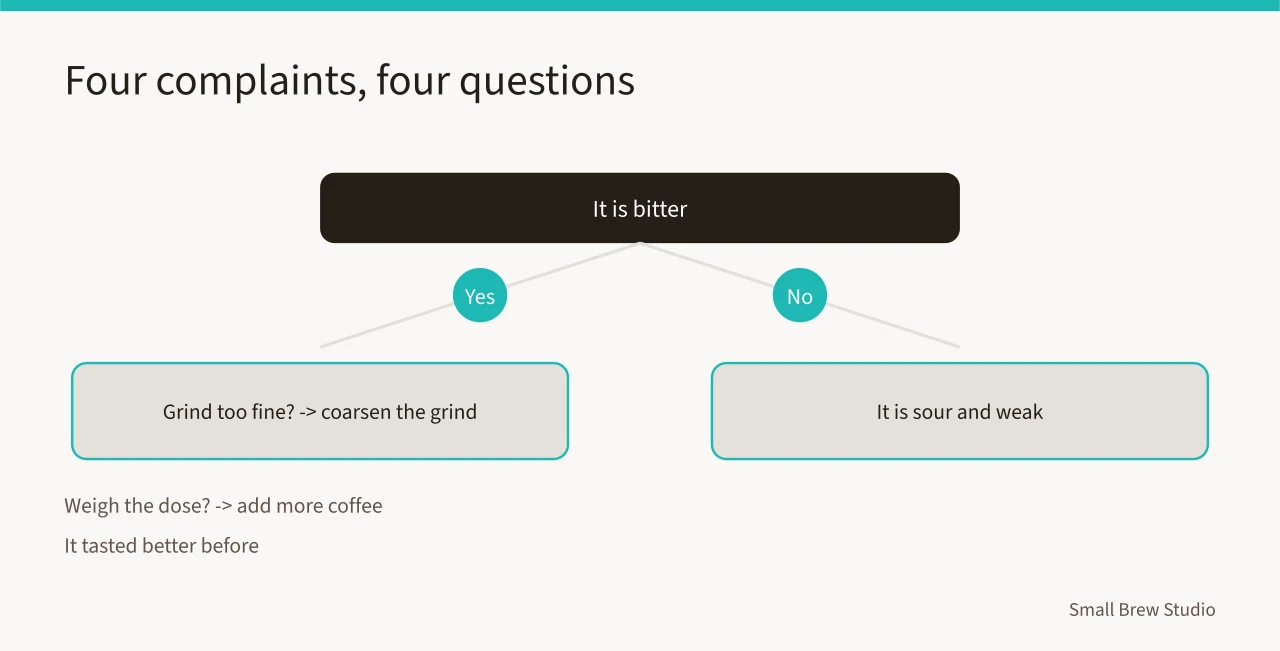
| "It is bitter" | Over-extraction or dark roast | How fine is your grind? |
| "It is sour and weak" | Under-extraction or low dose | Do you weigh the coffee? |
| "It tasted better before" | Stale bag or new grinder setting | When was it roasted? |
| "It tastes of nothing" | Old pre-ground, or hard water | Whole bean or ground? |
Four questions cover most of it, and none of them requires the customer to buy anything to answer. It helps to know which answers are expensive, because a ruined batch costs the whole batch and a ruined cup costs 20 grams.
Correct the cold brew claim
Correct one myth at the counter because it drives purchases. Cold brew is widely sold as low acid and gentler on the stomach.
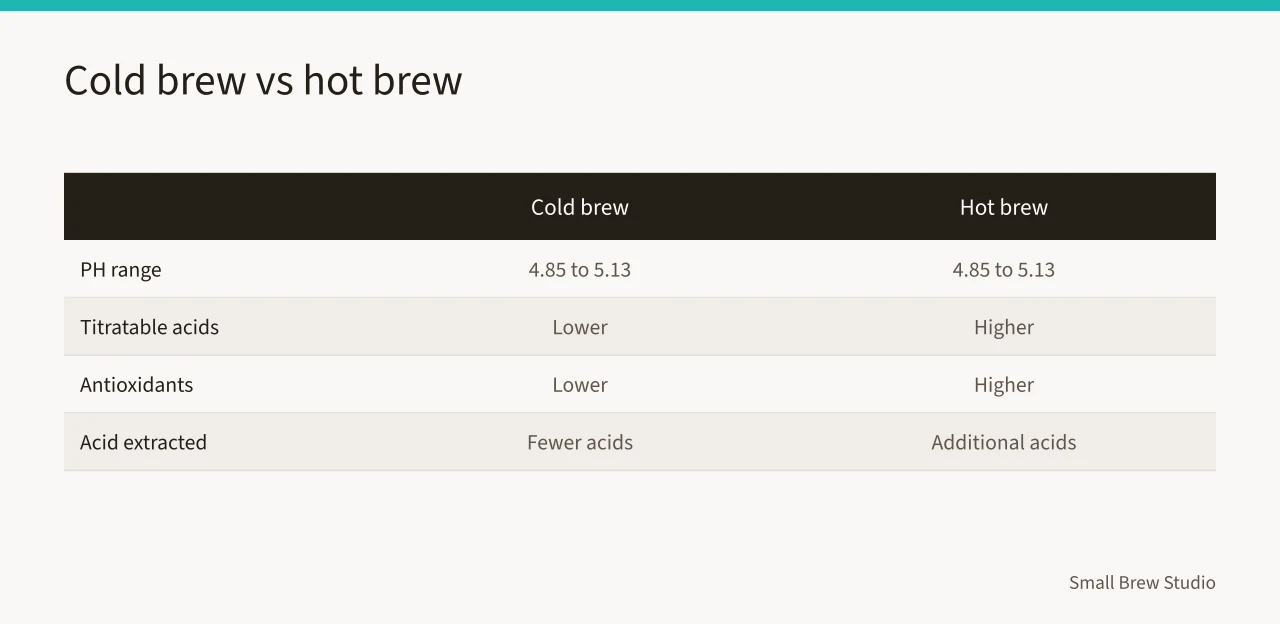
Research comparing cold and hot brews of light roast coffees from six origins at the same grind-to-coffee ratio found pH values comparable between cold and hot brews, ranging from 4.85 to 5.13. Hot brews showed higher total titratable acids and higher antioxidant activity.
So the pH is similar. Hot brewing extracts additional acids that cold brewing does not, which is a real difference, but it is not the difference the marketing describes. A customer who bought a cold brew setup for stomach reasons deserves to be told this before they buy a second one.
Storage advice is your highest-value free answer
The single most useful thing to tell a customer is where not to keep coffee. The refrigerator is the common error, because it is humid, temperature cycles every time the door opens, and coffee absorbs odors from everything else inside.
Extension guidance on removing refrigerator odors shows how persistent absorbed smells are. The recommended routine: wash every surface, then run the appliance filled with dampened crumpled newspaper for several days, changing it every other day. It warns odor absorbed into insulation may be impossible to remove.
A refrigerator is a container that holds smells. Ground coffee is a material that collects them.
The checklist
- Ask the four questions before recommending anything.
- Keep a scale on the counter and let customers weigh their usual scoop.
- Say the roast date out loud when you hand over a bag.
- Correct the cold brew acidity claim when it comes up.
- Recommend a cupboard, not a refrigerator, every time.
- Offer to grind for a customer without a grinder rather than selling them one today.
That last point loses one sale and gains a customer. Somebody who leaves with better coffee and no purchase comes back, and by then they usually understand why the grinder is the purchase that matters. The same four questions also let you point them at the ranked list of what actually goes wrong.